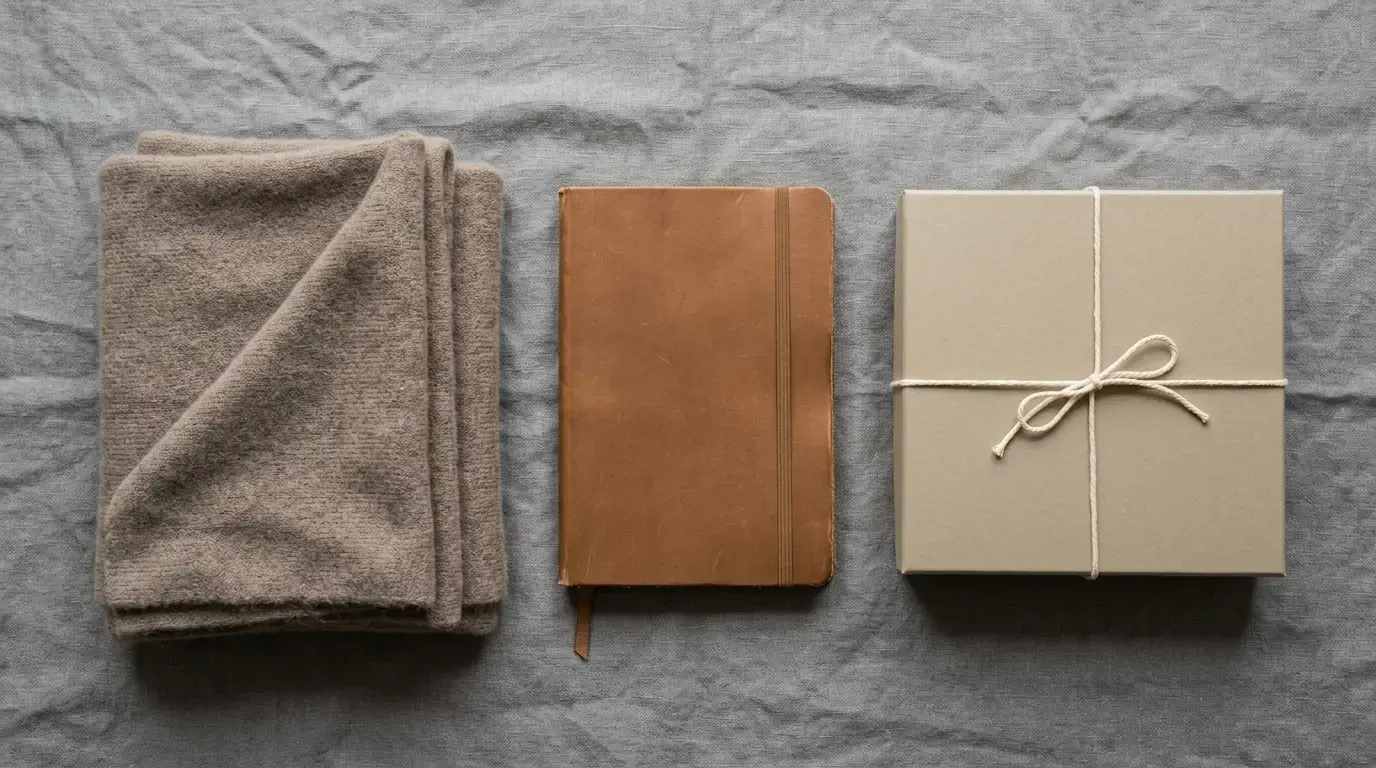
The best luxury gifts are not the flashiest — they are the ones still in use, and still valued, years later. That rules out most novelty 'luxury' and rules in a short list of categories that age well: watches, solid gold, real leather, and proper outerwear.
A watch is the classic for a reason: personal, lasting, and available at every budget. Our under-£1000 roundup is built precisely for gift-buyers who want something genuinely good without overspending, and a focused review like the Olivia Burton piece helps if you know the recipient's taste.
Solid gold jewellery is the rare gift that can appreciate. A 999.9 gold piece is both adornment and a small store of value — see our gold-versus-plated guide so you do not accidentally gift something that wears off within two years.
For someone facing real winters, a technical coat such as a Nobis is a gift used daily for a decade; our Nobis review explains the fit and warmth ranges. It is a present that quietly says you paid attention to their life, not just their wishlist.
The three questions that make a gift land
Gift-buying goes wrong in a predictable way: the buyer optimises for the moment of opening rather than for the year afterwards. These three questions correct for that.
Does it replace something they already use and tolerate? This is the highest-scoring category of gift and it is consistently overlooked. Almost everyone owns a wallet, an umbrella, a work bag or a set of towels that is functional and slightly depressing. Replacing one of those with a genuinely good version is used every single day and would never have been bought for themselves.
Does it require them to change a habit? If it does, the odds drop sharply. Equipment for a hobby they have mentioned but not started, ambitious kitchen gear, anything requiring a new routine — these are gifts about the giver's hopes rather than the recipient's life.
Can they use it without making a decision? A gift that arrives needing a size to be chosen, an account to be created or a return to be processed is a small administrative task wearing a bow. Vouchers have their place; unfinished gifts do not.
Categories that age well, and why
Watches win because they are used daily, dated slowly, and available at every budget. Our under-£1000 roundup is built for this exact problem, and the Olivia Burton review covers the design-led end.
Solid gold wins because it is one of the very few gifts with intrinsic material value, and because a simple piece is almost impossible to date. Read the gold-versus-plated guide before buying so you do not spend real money on a coating.
Leather wins on the same logic and with the same caveat: it must be the right leather, well made, or it fails within two winters. Our guide to spotting quality leather is a thirty-second check you can do in a shop.
Outerwear wins where the climate justifies it, because it is worn every day of a season for years. It also carries the highest sizing risk of anything here.
Consumables of unusually high quality win more often than gift guides admit. Excellent coffee, good olive oil, proper candles, a case of something they like — used, appreciated, and leaving no obligation to display anything.
Sizing and personalisation risk
Two categories of gift routinely destroy their own return path.
Sizing is the obvious one. Clothing, rings and shoes bought as surprises are frequently wrong, and the conversation required to fix it undoes the gesture. Where you cannot verify a size discreetly, choose something size-independent: a watch on an adjustable bracelet, a scarf, a bag, a necklace with an adjustable chain.
Personalisation is the less obvious one. Engraving, monogramming and made-to-order finishing all make a gift feel considered and all make it non-returnable and effectively worthless on resale. That is a fair trade for a gift you are certain about. It is a bad trade for a gift you are guessing at. Ask yourself which one this is before you approve the engraving.
Gifting across borders
If the gift crosses a border, three things change and none of them are visible at checkout.
Duty and import tax may fall due on arrival, and in many countries they fall on the recipient rather than the sender — which turns your gift into a bill. Check the destination country's rules before ordering, and consider a retailer that ships with duties prepaid.
Warranty may be territorial. A manufacturer's warranty honoured in the country of purchase may not be honoured where the recipient lives, and for anything mechanical that matters. Ask the retailer directly rather than assuming international coverage.
And returns become impractical. A return that requires an international shipment at the recipient's cost is not a return. Where you are shipping abroad, buy from a seller with a local presence in the destination country if you possibly can.
A worked example, with invented numbers
The figures here are invented and are not real prices. They illustrate an allocation decision.
Suppose a budget of 400 for one person.
Allocation A: four gifts of 100 each. More parcels, more anticipation, and — realistically — four items each competing with things the recipient already owns at a similar level.
Allocation B: one gift of 400. One object, materially better than anything they would buy themselves, in a category they use daily.
Allocation C: one gift of 300 and 100 held back for something small and specific, like a second strap for a watch or a bottle of something they mentioned.
Allocation C wins more often than either extreme, because the main gift is decisive and the small one demonstrates attention. The general principle: in gifting, one clear step up in quality beats several sideways steps.
What not to give
Anything requiring assembly. Anything that creates ongoing cost or obligation for the recipient. Novelty versions of serious objects. Technology at the steep end of its improvement curve, which will look obsolete within two years. And subscription gifts that quietly renew at the recipient's expense, which are a trap rather than a present.
Presentation and paperwork
- Include a gift receipt even when you are certain, and especially when you are not.
- Keep the box, the papers and any warranty card together with the gift rather than throwing them out for tidiness.
- Register any warranty in the recipient's name if the maker allows it.
- For jewellery or watches, pass on the purity, weight or serial details in writing — it matters for insurance later.
- Where sizing is involved, note the size somewhere the recipient can find it for future purchases.
- If it is engraved, say so before they open it, so nobody feels obliged to pretend a wrong size fits.
Whatever you choose, time it with the live codes on our deals board — a brand discount turns a generous gift into an even better one. The principle holds across all of it: buy the material and the longevity, and the gift keeps giving long after the wrapping is gone.