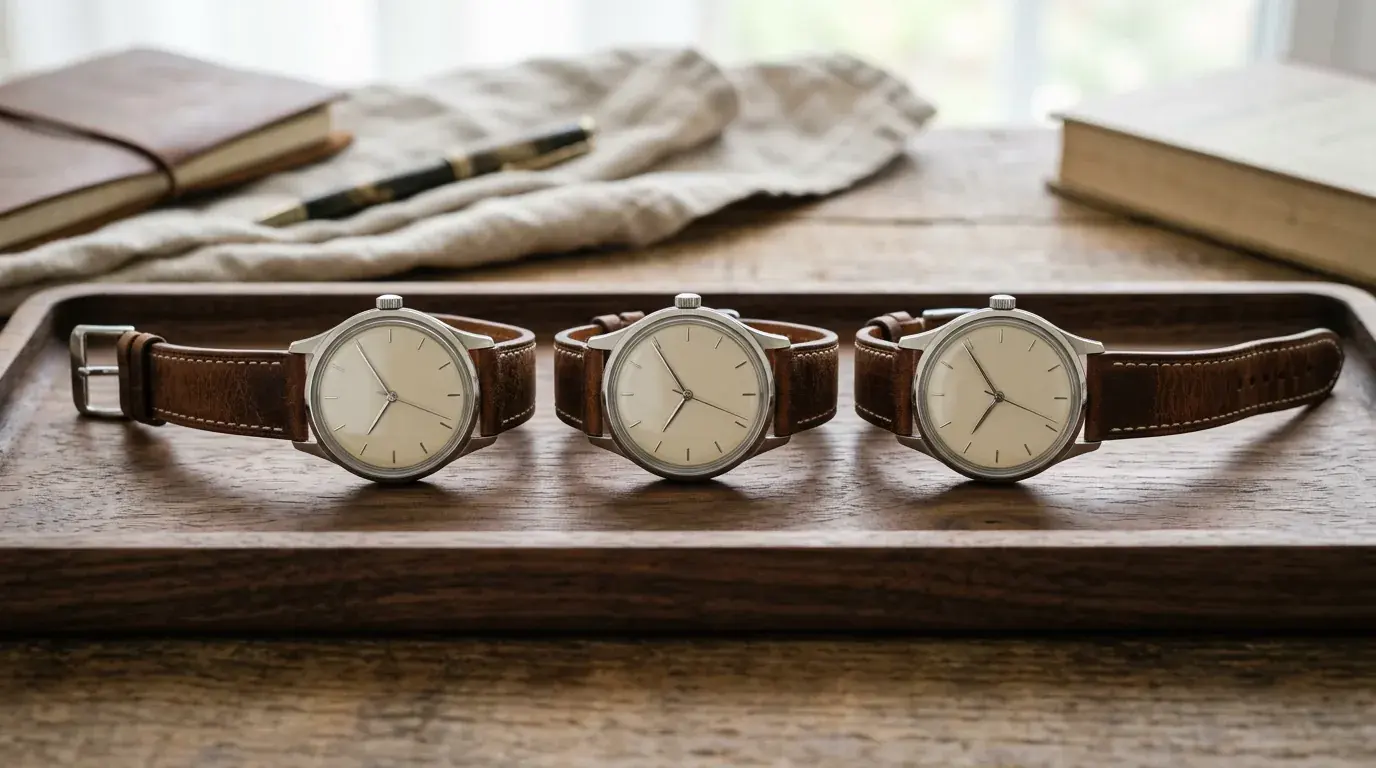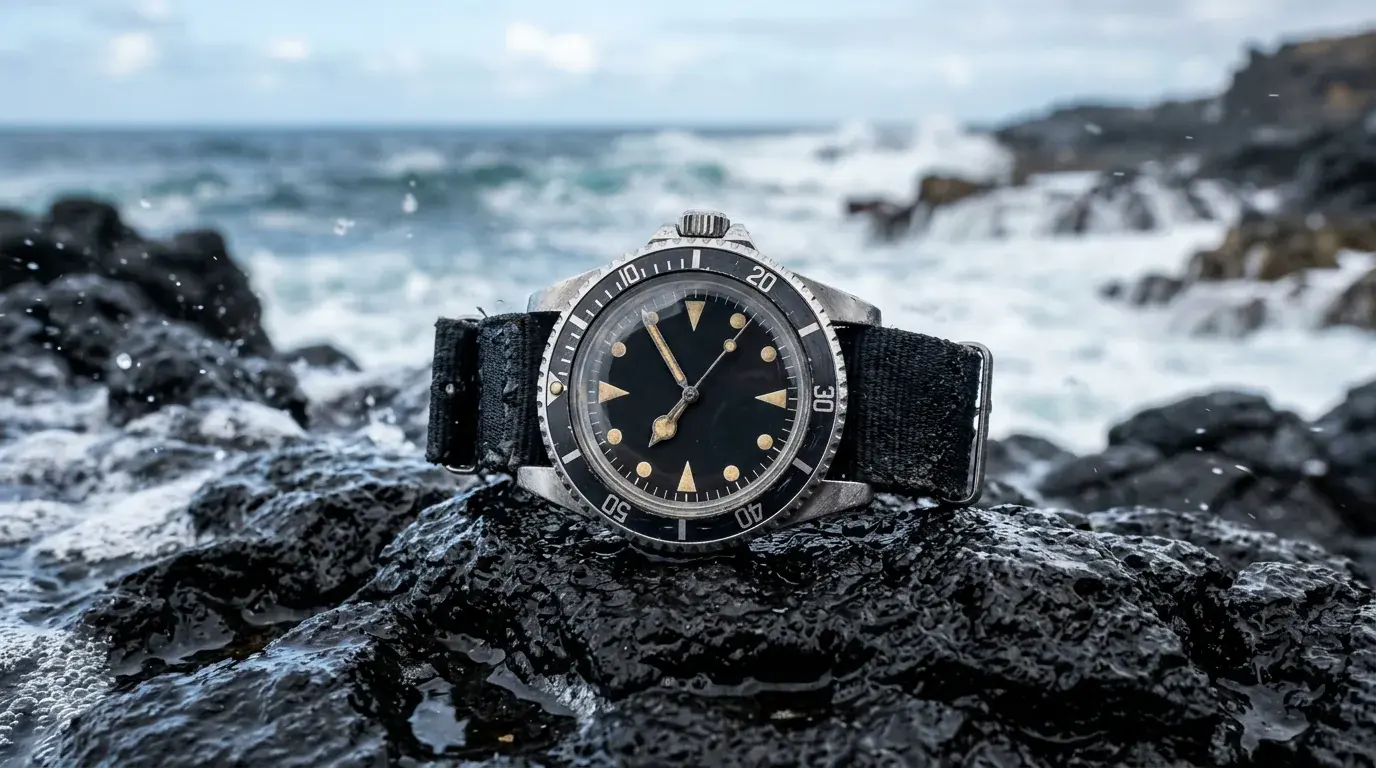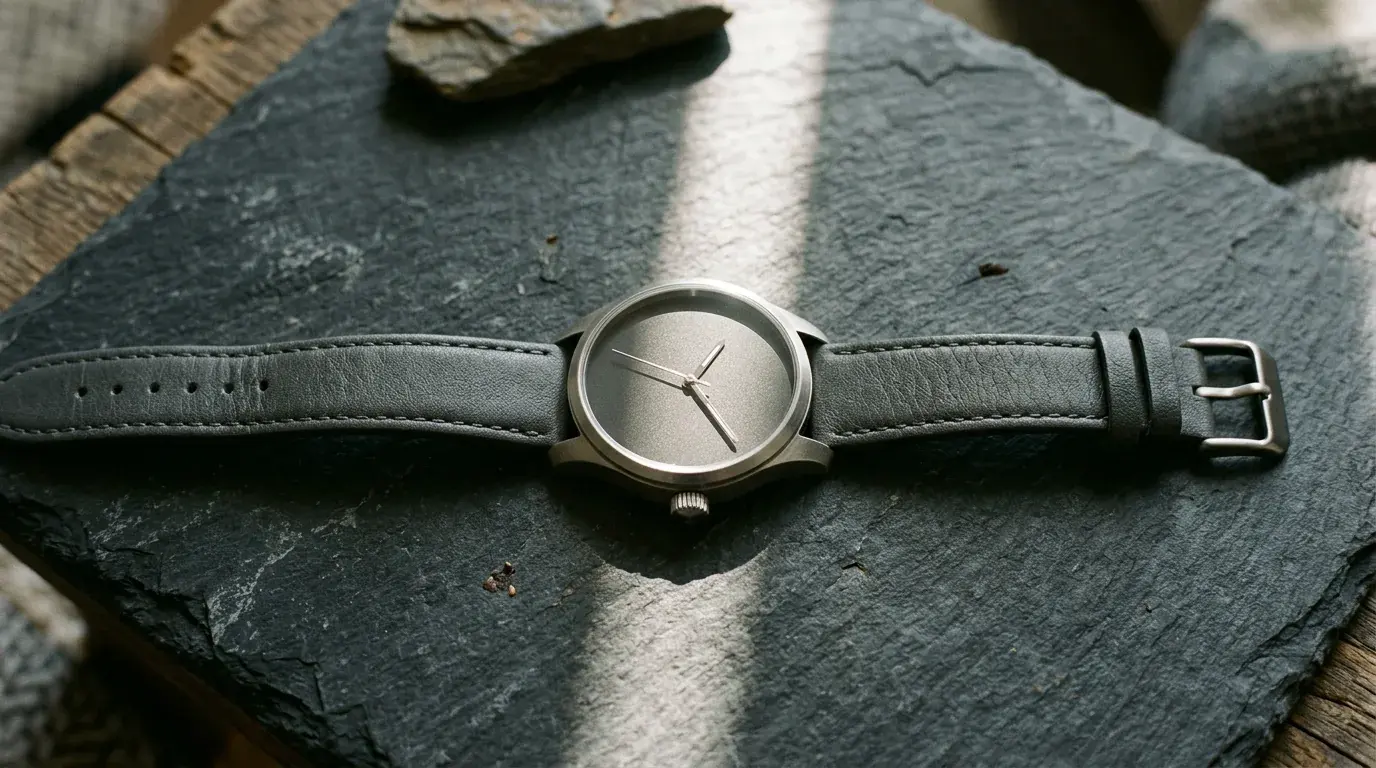
If we could recommend one watch to someone who just wants a good watch and never wants to think about it again, it is a Citizen Eco-Drive. The technology is simple and brilliant: a solar cell under the dial charges a capacitor, so the watch runs on any light and never needs a battery change.
Accuracy is excellent for the price — typically within fifteen seconds a month, with radio-controlled and satellite models that stay perfectly synced. For daily life that is faultless. There is no winding, no battery, no real maintenance beyond the occasional seal check if you swim with it.
The range is huge, from slim dress pieces to chunky divers and titanium field watches. Titanium models are a quiet highlight: lighter than steel, hypoallergenic, and tougher than they look. Across the board the value is hard to argue with, which is why the Eco-Drive anchors our under-£1000 watch roundup.
Compared with a Swiss automatic like a Longines, the Eco-Drive trades mechanical romance for total convenience. Neither is 'better' — they are different buys, and we lay out the decision in our first-watch tutorial. For most people most of the time, set-and-forget wins.
How the light-powered movement actually works
There are three parts to it and understanding them explains both the strengths and the one real limitation.
A photovoltaic cell sits beneath the dial, which is why the dial has to pass at least some light — that is a design constraint, and it is why solar dials tend to be lighter, more textured or perforated in ways you can sometimes see up close. The cell generates current from any light source, indoor or outdoor, though daylight is far more effective than a desk lamp.
That current charges a rechargeable secondary cell inside the watch. This is the part people get wrong: the watch does not run directly off light, it runs off a store that light keeps topped up. That store is what carries the watch through nights, sleeves and drawers.
A power-management circuit then runs a conventional quartz movement from the stored charge, and on many models it also runs a power-saving mode that parks the hands when the watch has been in darkness for an extended period. Bring it back into the light and it resets itself. The specific behaviour and the reserve are stated per model in the manual, and the manual is the source worth reading rather than a retailer summary.
What "never needs a battery" does and does not mean
This is the honest limit, and no marketing page will lead with it.
The claim is accurate on its own terms: you will never buy a disposable cell for it, and you will never have the case opened for a routine battery change, which is genuinely the most common way water resistance is lost on ordinary watches.
But the rechargeable cell inside is a component with a finite working life, like any rechargeable cell. On a watch kept in regular light it is a very long life, long enough that many owners never encounter it. It is not infinite. When charge-holding eventually degrades — the symptom is a watch that runs down faster than it used to despite normal wear — the cell is a service item that the maker replaces.
So the correct summary is not "maintenance-free forever". It is "no routine maintenance for a very long time, then one service item". That is still an excellent proposition, and it is a better one when you know it in advance.
Gaskets are the other quiet consumable. They harden with age and with heat, and they are what actually keep water out. If you swim with the watch, have the seals tested periodically regardless of how the movement is doing.
Radio-controlled and satellite models, and whether you need them
Some models add automatic time synchronisation. Radio-controlled watches receive a time signal from a terrestrial transmitter; satellite models take a signal from positioning satellites and can also set the time zone from your location.
Both remove the last remaining chore, which is adjusting the watch twice a year and after travel. Both also add cost, and radio reception is dependent on being within range of a transmitter and on where the watch spends the night.
The honest assessment: if you travel across time zones often, satellite synchronisation is a real convenience. If you do not, a standard model with good accuracy will need setting perhaps twice a year, which is not a burden worth paying to avoid.
Choosing within the range
The line-up is wide enough to be confusing, so choose by use rather than by model number.
For office and formal wear, look for the thinnest case you can find and a plain dial. Thickness, not diameter, decides whether a watch works under a cuff.
For daily knockabout wear, titanium is the quiet recommendation. It is lighter than steel and does not provoke the skin reactions some people get from alloys, and Citizen's own surface-hardening treatments — named on the specification sheet — make it far more scratch-resistant than untreated titanium would be.
For water use, read the rating rather than the styling. A watch that looks like a diver is not necessarily rated as one, and the rating is a static laboratory pressure test rather than a promise about swimming.
For legibility, check the hands and indices against the dial in a photograph taken in normal light, not in a studio shot. Contrast is the whole job of a dial and it is the thing most often sacrificed to fashion.
The honest limits
There is nothing mechanical to enjoy. No sweep, no rotor, no craft. If that is what draws you to watches, a Longines automatic is the other direction and we would not argue you out of it.
Resale is negligible. Buy to wear.
The dial has to see light. A watch worn only under long sleeves, in an office, in winter, will charge more slowly than the specification implies. It is rarely a practical problem, but a watch that lives permanently in a drawer between occasional outings is not the right use case for this technology.
Lume is conventional. The dial glow is ordinary photoluminescent material that charges in light and fades over hours. If you want illumination that is always on, that is a different technology entirely and it is the subject of our Luminox guide.
What to check before you buy
- What is the case thickness, and will it sit under a cuff?
- What is the lug-to-lug length compared with a watch you already wear comfortably?
- Is the case steel or titanium, and is a surface treatment named on the spec sheet?
- Is the crystal sapphire or mineral?
- What is the stated water-resistance rating, and does the model description actually mention swimming or diving?
- What power reserve in darkness does the manual state, and does the model have a power-saving mode?
- Does the model include radio or satellite synchronisation, and do you genuinely need it?
- Who services Citizen watches in your country, and what does a cell replacement cost when the day comes?
Buying: Eco-Drive is widely stocked and frequently discounted with brand codes. We keep current ones on the deals board, and the Citizen range at First Class Watches is a reliable, warrantied source. Spend the saving on a second strap — it transforms the watch from office to weekend.