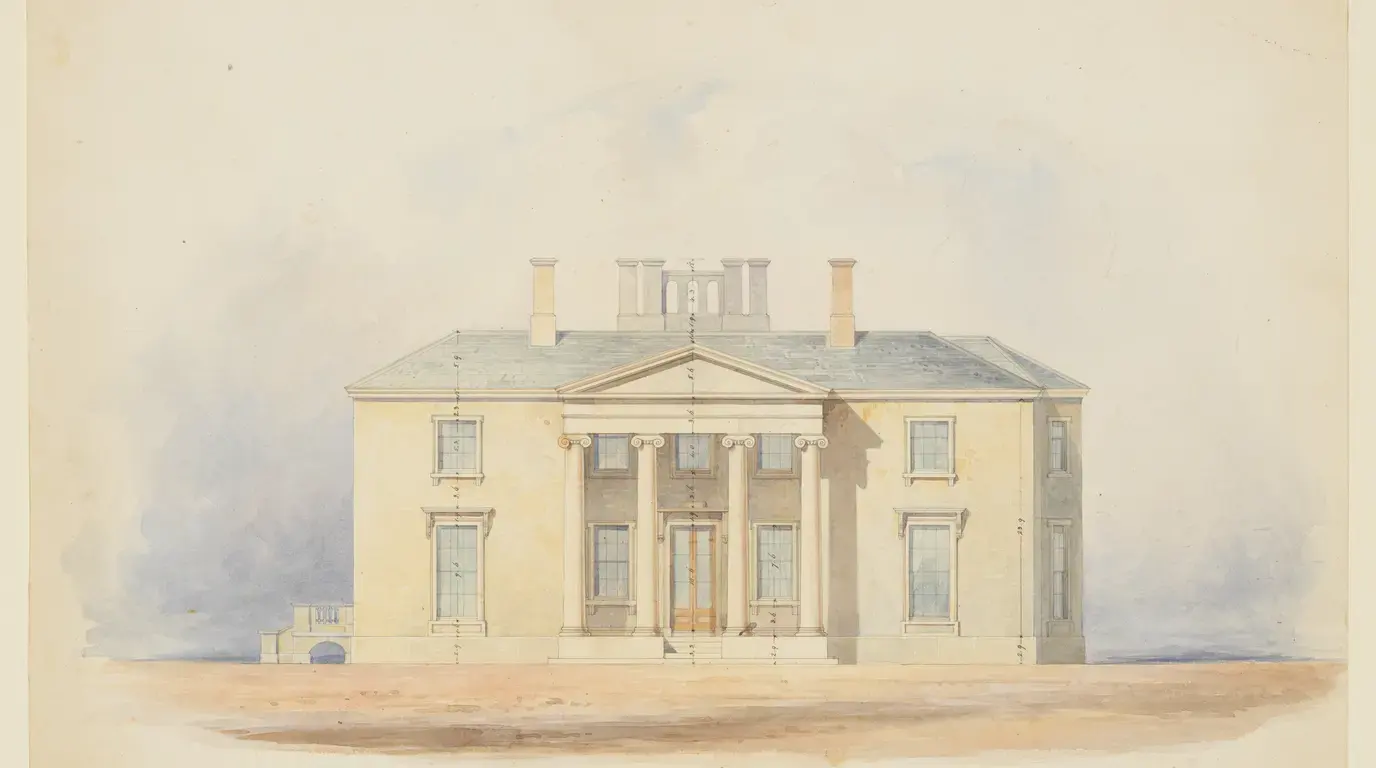
The "mansion tax" announced in the UK's 2025 Budget is formally the High Value Council Tax Surcharge (HVCTS): an annual charge, on top of ordinary council tax, on owners of residential property in England worth £2 million or more in 2026 values. It is due to start in April 2028, in four flat bands from £2,500 to £7,500 a year, uprated each year with CPI. As of 23 October 2026 it is not yet law: the government's consultation on the design ran from 19 May to 14 July 2026, and the consultation page on GOV.UK shows no published response yet.
Everything below is taken from the government's consultation document, High Value Council Tax Surcharge, read on 23 October 2026. Where the document says "proposes" or "seeks views", this article says so too, because those details can still change.
The bands and what each one costs
Properties will be placed in one of four bands according to their value, and each band carries a flat annual charge.
| Property value (2026 prices) | Annual HVCTS charge |
|---|---|
| £2 million to £2.5 million | £2,500 |
| £2.5 million to £3.5 million | £3,500 |
| £3.5 million to £5 million | £5,000 |
| Over £5 million | £7,500 |
Three features of the design matter more than the headline figures.
- The charges rise with inflation. They will be uprated in line with CPI every year, so the figures above are 2026 numbers, not 2028 bills.
- The bands do not. Revaluations are planned every five years, the next in 2033, and any decision to move the band thresholds is left to that revaluation and "a future government".
- It sits on top of council tax. Existing council tax bills continue to be paid alongside it, and it will be collected by local authorities.
The government's own estimate is that fewer than 1% of residential properties in England will be in scope, and that the surcharge will raise around £430 million a year from 2028/29, to support local government services.
How your property will be valued
The Valuation Office (VO), part of HM Revenue and Customs, will run a targeted valuation exercise to identify properties worth £2 million or more in 2026. The surcharge applies to domestic dwellings, houses and flats, and can include mixed-use property where the residential part is distinct and self-contained. Exempt property types will not be valued at all.
Two rules affect owners who build or improve:
- A property completed after April 2028 and before the next revaluation will be valued and banded on completion, or from the day it is occupied, as with council tax.
- A property significantly improved after the start date, the consultation's example is a large extension, will be revalued at the next revaluation or on sale, whichever comes first.
If you are planning major works on a house near the £2 million line, that second rule is the one to read twice. Our guide to what property tax is actually levied on explains why assessed values and market values so often diverge.
Who pays: owners, companies and trustees
This is the biggest structural difference from council tax, which is mostly paid by occupiers. The HVCTS is paid by owners. The consultation proposes that:
- the legal owner, freeholder or leaseholder, of a property worth £2 million or more is liable;
- joint owners are jointly and severally liable;
- where a company legally owns the property, the company is liable;
- owners under a long lease are liable, given their rights over the property;
- where a property is held in trust, the trustees are liable, jointly and severally if there is more than one, and this applies even to bare trusts.
The government rejected billing the beneficial owner, on the ground that there is no comprehensive register of beneficial ownership; local authorities will identify legal owners using HM Land Registry data. The consultation notes that where legal and beneficial owners differ, they can settle the cost between themselves.
For anyone holding English property through a company or trust, the practical point is simple: the structure does not take the property out of scope, it only decides who receives the bill. Our guide to owning property personally, through a company or in a trust covers the wider trade-offs.
Non-resident owners
The consultation also floats a possible extra charge. Citing high-pressure markets "particularly in areas such as London", it says the government is interested in exploring, "depending on the evidence base", whether there could be a case for an additional HVCTS premium on non-UK resident owners. It is a question in a consultation, not a proposal with a rate, but overseas owners of prime London property should watch for it in the government's response.
Who can defer, and who cannot
Liability is based on owning a high-value asset rather than on income, and the government accepts some owners will struggle to pay. It proposes a deferral scheme that lets payment wait until the property changes hands, modelled on the Deferred Payment Agreements used for adult social care.
- It is proposed for owners' primary residence only. Deferral will not be available for second homes or to companies.
- The proposed eligibility tests are an annual household income of £35,000 or less, or capital savings of £16,000 or less, or a household member who meets defined disability criteria.
- Interest will be charged on deferred amounts at a rate set nationally; the consultation asks what that rate should be.
- A charge is taken on the property to secure the debt, which is repaid on disposal. Owners can end the deferral and pay earlier.
Exemptions and discounts
Some property types are proposed for an exemption or a discount of up to 100%: purpose-built student halls, Ministry of Defence accommodation for armed forces, diplomatic accommodation owned by a sovereign state, registered social housing, care homes and similar long-term care accommodation, refuges for those escaping domestic violence, and new-build property still owned by the developer, until first sale or twelve months after completion, whichever is sooner. The government is also asking whether tied property, such as a farmhouse a farmer must live in, and property owned for charitable purposes should get a discount.
There is no proposed exemption for second homes or empty homes, and none for property held by a family company or trust.
Challenging a band
Owners will be able to challenge both their band and their liability, and then appeal to the Valuation Tribunal for England.
| Step | Proposed time limit |
|---|---|
| First challenge to the initial banding | 8 months |
| Challenge after that (new band, revaluation, new owner) | 6 months |
| VO response to a banding challenge | 4 months |
| Appeal to the Valuation Tribunal after a VO decision | 3 months |
| Local authority response to a liability challenge | 2 months |
Challenges about who should pay, exemptions and deferral eligibility are not time-limited. You keep paying while a challenge runs, with any overpayment refunded later. The consultation also proposes that owners support a challenge with evidence such as similar properties in a different band or relevant sales, and states that estimates from estate agents or property listing websites would not be accepted.
The practical preparation starts now: if your house is close to £2 million, keep the evidence that would support a lower 2026 value, comparable sales and any defects, rather than relying on an agent's appraisal later.
What to do now if you own a £2 million-plus home in England
- Estimate where you sit against 2026 values. The band is set on a 2026 valuation, not on what you paid or what the house is worth in 2028.
- Budget for CPI uprating. A Band 1 charge of £2,500 in 2026 prices will be higher by the time the first bill arrives.
- Check who the legal owner is. For a company, trust or long lease, the bill goes to the company, the trustees or the leaseholder.
- Note what deferral does not cover. Second homes and company-owned property are excluded from the proposed scheme.
- Watch for the response. Rates, thresholds, deferral criteria and the non-resident question can all change before legislation.
Thinking of selling instead? That is a decision about far more than a charge of a few thousand pounds a year, but if you do sell, our guides to prime London property and the London market dossier set out how that market works.
General information, not tax or legal advice. The High Value Council Tax Surcharge is a proposal described in a government consultation; it is not yet legislation and its rates, bands, reliefs and procedures can change. Figures are 2026 values from the consultation document as read on 23 October 2026. Take advice on your own position before acting.
Frequently asked questions
What is the UK mansion tax?
"Mansion tax" is the popular name for the High Value Council Tax Surcharge, an annual charge on owners of residential property in England worth £2 million or more in 2026 values. It was announced in the 2025 Budget and is due to apply from April 2028, on top of council tax.
How much is the mansion tax in the UK?
The consultation sets four bands: £2,500 a year for £2 million to £2.5 million, £3,500 for £2.5 million to £3.5 million, £5,000 for £3.5 million to £5 million, and £7,500 above £5 million. Charges will rise with CPI each year.
Does the mansion tax apply in Scotland and Wales?
The consultation covers owners of residential property in England only.
Do second homes pay the High Value Council Tax Surcharge?
Yes. The surcharge applies to residential property worth £2 million or more regardless of use, and the proposed deferral scheme is not available for second homes.
Can I appeal my mansion tax band?
The consultation proposes a first challenge to the Valuation Office, with an initial eight-month window, then an appeal to the Valuation Tribunal for England. Estimates from estate agents or listing websites would not be accepted as evidence.